Treaty of Gulistan
2 Aban 1192· 29 Shawwal 1228 AH~
Iran ceded most of its Caucasian territories to Russia, beginning the long subordination that the constitutionalists sought to reverse.
Transcaucasia
2 Aban 1192· 29 Shawwal 1228 AH~
Iran ceded most of its Caucasian territories to Russia, beginning the long subordination that the constitutionalists sought to reverse.
Transcaucasia
2 Esfand 1206· 7 Sha‘ban 1243 AH~
Completed the loss of the Caucasus and imposed capitulations and a tariff ceiling that crippled Iranian manufactures.
Azerbaijan
Esfand-Farvardin 1216
American Presbyterian missionaries opened Iran's first girls' school, attended mostly by Armenians, offering free admission, books, food and lodging to overcome parents' reluctance. Muslim girls did not attend the Tehran mission school until the 1870s; a genuinely popular campaign for women's education only began with the Constitutional Revolution.
Urmia
1228-1229 AP
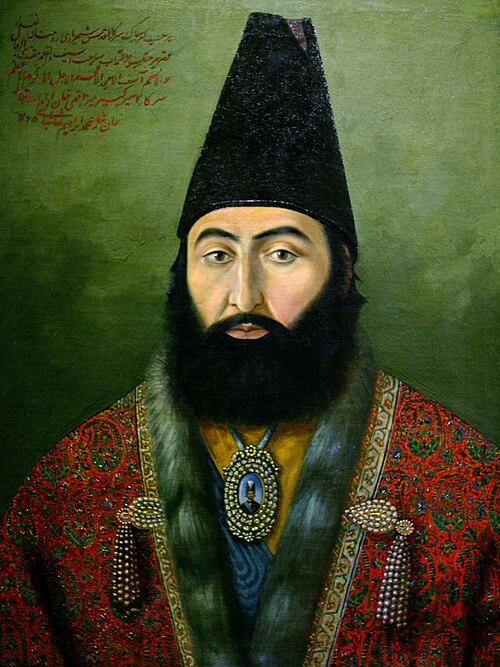
Amir Kabir directed the mass destruction of the Babis. Afary notes the irony that the secular reformer who founded the Dar al-Funun also crushed the period's most radical grassroots religious movement — and that the ultimate beneficiaries were the state and the orthodox 'ulama.
Iran
18 Tir 1229· 29 Sha‘ban 1266 AH~
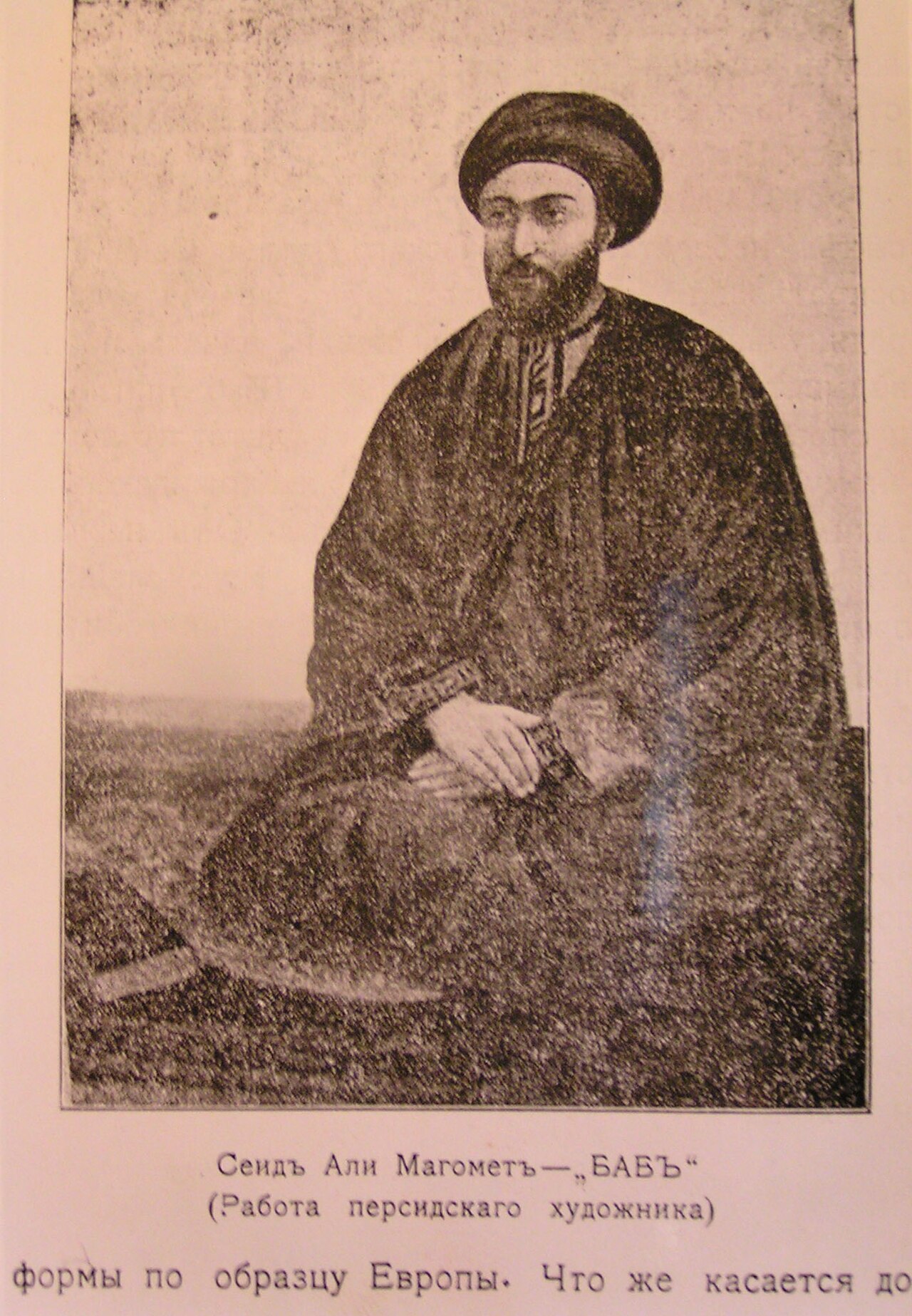
Sayyid 'Ali Muhammad Shirazi was shot in Tabriz; the suppression of the Babis that followed was directed by Amir Kabir.
Tabriz
1237-1238 AP
A masonic-style reformist society drawing Dar al-Funun graduates and Qajar princes; Nasir al-Din Shah, who had first encouraged it, banned it in 1861 and exiled Malkum Khan.
Tehran
1249-1250 AP
Mass famine, attributed by contemporaries to the switch from cereals to opium as a cash crop, compounded by drought.
Iran · Yazd · Isfahan
1250-1251 AP
Nasir al-Din Shah granted Baron de Reuter a sweeping monopoly over Iran's railways, mines and banks; withdrawn after domestic and Russian opposition.
Iran
1261-1262 AP
Iran's first merchant association, founded on Amin al-Zarb's initiative, opened branches in fourteen towns and in Baghdad and Istanbul. It demanded protective tariffs, a commercial court and a bank, and collapsed within a year under attack from the 'ulama, provincial governors and the commerce minister.
Tehran
1268-1269 AP
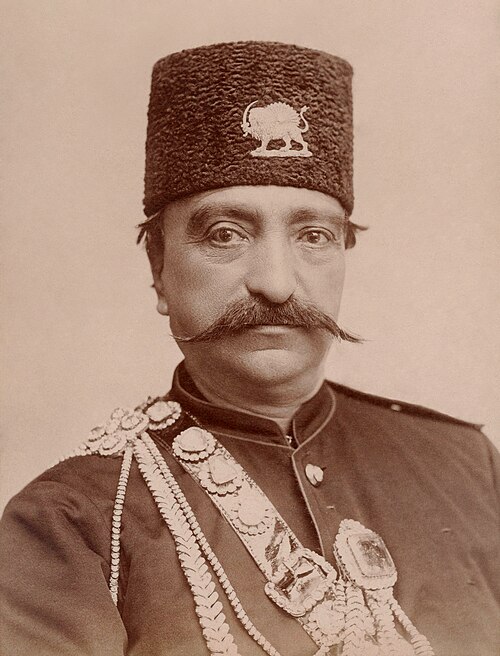
Nasir al-Din Shah granted Major G. F. Talbot a fifty-year monopoly on the production, sale and export of all Iranian tobacco, for £15,000 a year and a share of profits.
Tehran
1268-1269 AP
The dissident journal, smuggled into Iran, called for a parliamentary government and a majlis-i shawra and framed European ideas in Islamic terms.
London
Mordad-Shahrivar 1270
In August 1891 the Tobacco movement spread beyond the merchants to the lower classes: a group of four thousand — mostly porters, coffee-house waiters, peddlers and small shopkeepers — wrote a joint petition to the shah. A Tabriz leaflet of the period threatened both the concessionaires and those 'ulama who would not take part.
Tehran · Tabriz
Aban-Azar 1270
A fatwa bearing Mirza Hasan Shirazi's name banned the use of tobacco. Afary notes it was apparently drafted by merchants and the Tehran mujtahid Mirza Hasan Ashtiyani, with Shirazi assenting.
Karbala · Tehran
Azar-Dey 1270
A nationwide boycott of tobacco, sanctioned by Mirza Hasan Shirazi's fatwa, forced the cancellation of the British Régie monopoly — the first victory of the merchant–clerical–intellectual coalition that would make the revolution.
Tehran · Tabriz · Isfahan
1270-1271 AP
£500,000 was borrowed from the Imperial Bank of Persia to compensate the tobacco company — beginning the debt spiral that would dominate the constitutional period.
Tehran
Dey-Bahman 1270
Against the advice of Amin al-Sultan and the British minister, the shah cancelled the concession — the movement's victory, paid for by Iran's first major foreign loan.
Tehran
12 Ordibehesht 1275· 18 Dhu al-Qa‘dah 1313 AH~
Mirza Riza Kirmani, a follower of al-Afghani, shot the shah at the Shah 'Abd al-'Azim Shrine on the eve of his jubilee.
Shah 'Abd al-'Azim Shrine
1275-1276 AP
Muzaffar al-Din Shah dismissed Amin al-Sultan and appointed the reformist Amin al-Dawlah, who reformed the post, built roads and founded the Society of Learning.
Tehran
1275-1276 AP
A society of reformist intellectuals founded under Amin al-Dawlah's premiership; its members included Yahya Dawlatabadi and the younger Amin al-Zarb, and it sponsored privately financed modern schools.
Tehran
1276-1277 AP
Nasir al-Mulk, as finance minister under Amin al-Dawlah, invited Belgian officials to take over the customs bureaux from local tax farmers and centralise revenue collection.
Tehran
1278-1279 AP
Amin al-Sultan negotiated £2.4m and £1m from Russia, financing three royal tours of Europe. The first loan carried the condition that Iran could contract no further loan without Russian approval — the humiliation that revived the opposition.
Tehran · Russia
1278-1279 AP
Successive attempts to reimpose a uniform customs tax (1895, 1898–99, 1901, 1903, 1904) drew protests in 1900, 1903 and 1905. The February 1903 tariff favoured Russian merchants; customs revenue tripled to £600,000 while the deficit reached £800,000.
Shiraz · Tehran · Isfahan · Tabriz
1278-1279 AP
An anonymous anticlerical satire jointly written by Majd al-Islam Kirmani, Malik al-Mutikallimin and Sayyid Jamal al-Din Va'iz, imagining the Day of Resurrection with the leading clerics called to account.
Isfahan
1279-1280 AP
Taqizadah, then teaching science at the Tabriz Dar al-Funun, founded a modern school with his circle; orthodox clerics shut it down, so the group opened the Tarbiyat bookstore instead.
Tabriz
1280-1281 AP
The Tarbiyat bookstore's biweekly ran for a year with a large Tehran circulation, backed by Yahya Dawlatabadi.
Tabriz
1281-1282 AP
The tariff drawn up under Joseph Naus favoured Russian imports and taxed the bazaar, uniting merchants against the government.
Iran
1281-1282 AP
Persecution that obliged many Azali Babis and Baha'is to conceal their affiliation through taqiyah — a concealment that has since obscured their role in the revolution.
Yazd · Isfahan
1282-1283 AP
The library became a regular meeting place for hundreds of reformers; the Revolutionary Committee was recruited from its circle.
Tehran
Bahman-Esfand 1282
Japan's defeat of Russia was read across Iran as proof that a constitutional Asian state could beat a European autocracy.
Japan · Russia
Ordibehesht-Khordad 1283
A clandestine committee of reformist intellectuals and preachers began to meet — the organisational germ of the revolution.
Tehran
29 Azar 1283· 13 Shawwal 1322 AH~
Japan's victory over a Great Power was read across Asia as proof that a constitutional non-white nation could defeat a European autocracy, and it fed directly into the 1905 Russian Revolution.
Japan
1283-1284 AP
Iranian migrant workers in the Baku oilfields founded the Firqah-yi Ijtima'iyun-i 'Amiyun, which would supply the revolution with its social democratic wing, its fighters and its organisational model.
Baku
Organization of Social Democrats (Firqah-yi Ijtima'iyun-i 'Amiyun) · Workers
1283-1284 AP
Peasant families unable to pay their taxes had their daughters seized and sold by corrupt officials. The scandal was taken up by Dihkhuda, who wrote a poem about the women of Quchan, and by the newspaper Majlis, and became one of the revolution's most potent rallying cries — a case where the rural grievance and the woman question met.
Quchan
1283-1284 AP
Women reportedly formed human barriers between the armed government forces and the clerics who had taken sanctuary — the movement's first recorded act of collective female protection.
Shah 'Abd al-'Azim Shrine
2 Bahman 1283· 16 Dhu al-Qa‘dah 1322 AH~
Bloody Sunday opened the Russian revolution, whose methods — mass strikes, soviets, social democratic parties — passed directly into Iran through Transcaucasia.
St. Petersburg
4 Esfand 1283· 18 Dhu al-Hijjah 1322 AH~
The Anjuman-i Makhfi began meeting, drawing together clerics, merchants and Azali intellectuals.
Tehran
Esfand-Farvardin 1283
Protests against the Belgian customs chief brought Sayyid Muhammad Tabataba'i and Sayyid 'Abdullah Bihbahani into the alliance that would lead the revolution.
Tehran
Esfand-Farvardin 1283
Timed for Muharram, when religious processions filled the streets. Bihbahani inflamed the crowd by displaying a photograph of Naus and his Belgian colleagues dressed as mullahs at a costume party. The bazaars closed, merchants took sanctuary at the Shah 'Abd al-'Azim Shrine, and Crown Prince Muhammad 'Ali Mirza promised Naus's dismissal to disperse them. It was this protest that first bound Tabataba'i and Bihbahani into alliance.
Tehran · Shah 'Abd al-'Azim Shrine
Azar-Dey 1284
The imam jum'ah invited Va'iz to give the Friday sermon, then interrupted him to accuse him of disrespect for the shah and of Babi sentiments. Va'iz was driven from the pulpit and the opposition scattered — a demonstration of how the charge of heresy could be used to break the coalition.
Shah Mosque, Tehran
22 Azar 1284· 16 Shawwal 1323 AH~
After the governor of Tehran had sugar merchants bastinadoed, two thousand protesters took sanctuary at the shrine and demanded a house of justice ('adalatkhanah) — the opening act of the revolution.
Shah 'Abd al-'Azim Shrine
Merchants (Tujjar) · 'Ulama · Theology Students (Tullab) · Azali Babis
1284-1285 AP
Non-Muslims were first granted the right to elect their own deputies, then told that exercising it would jeopardise the movement and provoke the 'ulama of the 'Atabat and Isfahan. The Jewish community had already elected 'Azizullah Simani. Both communities conceded, and Bihbahani and Tabataba'i undertook to 'represent' the Jews and the Armenians instead. Only the Zoroastrians held out, sending Arbab Jamshid with Bihbahani's backing. The secular 'nation of Iran' was thereby narrowed to the Muslim community.
Tehran
Iranian Jews · Armenians · Zoroastrians · Second Secret Anjuman
1284-1285 AP
In its first months the Majlis refused a £400,000 loan from Britain and Russia sought by Muhammad 'Ali Shah, and established that all foreign transactions, loans and commercial monopolies required its ratification.
Tehran
1284-1285 AP
Women organised meetings around wearing native cloth, urging others 'to wear their old clothes for some time' until Iran produced its own textiles — close kin to the Indian Swadeshi boycott of the same years. When men began attacking women in the streets for elegant chadurs or high-heeled shoes, Anjuman condemned their 'barbarous conduct', insisting the aim was to ban foreign cloth, not to police women's dress.
Tabriz · Tehran
22 Dey 1284· 16 Dhu al-Qa‘dah 1323 AH~
Muzaffar al-Din Shah conceded a house of justice and the protesters returned to Tehran; the promise was not kept.
Tehran
17 Farvardin 1285· 13 Safar 1324 AH~
Jalil Muhammad Qulizadah's illustrated satirical weekly began in Azeri Turkish; its cartoons became the shared visual language of the revolution on both sides of the Aras.
Tiflis · Baku
Tir-Mordad 1285
The leading clerics withdrew to Qum while some fourteen thousand merchants, guildsmen and students filled the garden of the British Legation. The double bast paralysed the capital and forced the shah to concede a constitution.
Qum · British Legation, Tehran
Guilds (Asnaf) · Merchants (Tujjar) · Theology Students (Tullab)
25 Tir 1285· 25 Jumada al-Ula 1324 AH~
As the government began arresting nationalist leaders, Malik al-Mutikallimin took sanctuary at the Friday Mosque and was joined by Tabataba'i, Bihbahani and a thousand supporters. When Sultan al-Va'izin was imprisoned, Bihbahani sent theology students to free him; the student Sayyid 'Abd al-Hamid was killed. His bloody shirt was carried through Tehran on a pole, and in the confrontation that followed more than a hundred people died.
Friday Mosque of Tehran · Tehran
27 Tir 1285· 27 Jumada al-Ula 1324 AH~
Beginning with fifty merchants and theology students, the sanctuary grew to twelve thousand by 30 July and fourteen thousand by 2 August — close to a third of Tehran's labour force. Over five hundred tents were pitched, one per guild, each with its own guard, kitchen rota and rawzah-khvan reciting the Karbala tragedy at night. Haidar Khan 'Amu Ughlu financed some of the first Sipahsalar students to enter. It was here, in twenty-three days, that a protectionist grievance became a demand for a constitution.
British Legation, Tehran · Gulhak
Guilds (Asnaf) · Merchants (Tujjar) · Theology Students (Tullab) · Anjuman of Women (Anjuman-i Nisvan)
7 Mordad 1285· 9 Jumada al-Thaniya 1324 AH~
After the crown prince intervened, Muzaffar al-Din Shah replaced the hated premier with the more liberal Mushir al-Dawlah and invited the 'ulama back from Qum. By then the protesters would settle for nothing less than a parliament.
Tehran
12 Mordad 1285· 14 Jumada al-Thaniya 1324 AH~
A proclamation consenting to a majlis was pulled off the walls of Tehran because it lacked the phrase 'the nation of Iran' and promised reforms only 'according to the sacred Shari'at'. The quarrel over a single word — Islamic majlis versus national majlis — was the quarrel over whether sovereignty rested in the faith or the nation.
Tehran
13 Mordad 1285· 15 Jumada al-Thaniya 1324 AH~
The shah's proclamation authorising the formation of a national assembly and the drafting of a constitution — the founding act of the Constitutional Revolution.
Tehran
17 Mordad 1285· 19 Jumada al-Thaniya 1324 AH~
After a delegation including Mushir al-Mulk asked Grant Duff to mediate, and after arguments that a Jewish, Armenian or Zoroastrian deputy could not sit in an 'Islamic' assembly — and that a cleric like Nuri could excommunicate deputies at will — the term national (milli) prevailed. The official date of the proclamation was backdated to 5 August, the shah's birthday.
Tehran
17 Shahrivar 1285· 20 Rajab 1324 AH~
The franchise was restricted by class and property, allotting seats to princes, 'ulama, merchants, landowners and guilds, and heavily over-representing Tehran.
Tehran
26 Shahrivar 1285· 29 Rajab 1324 AH~
News of the royal proclamation reached Tabriz and the bazaar struck, following Tehran's example with a sanctuary at the British consulate. Kasravi, sixteen at the time, described the city transformed in ten days: the enmity between Sunni Kurds and Shi'ite Azerbaijanis seemed to vanish, the feud between the Shaikhi, Karimkhani and Mutisharri'in sects subsided, and Muslims and Armenians — on the verge of bloodshed the winter before — began to cooperate.
Tabriz
Mehr-Aban 1285
A branch of the Baku Social Democrats was established in Tabriz; it began recruiting the volunteer fighters known as Mujahidin and Fada'in.
Tabriz
Secret Center (Markaz-i Ghaibi) · Organization of Social Democrats (Firqah-yi Ijtima'iyun-i 'Amiyun)
Mehr-Aban 1285
A few days before the imam jum'ah's expulsion, the cleric Mir Hashim was driven out on suspicion of collaborating with the crown prince. He returned to lead the anti-constitutionalist Islamiyah Anjuman in 1908–9.
Tabriz
14 Mehr 1285· 19 Sha‘ban 1324 AH~
The First National Consultative Assembly was inaugurated at the Golestan Palace. The Tabriz Anjuman opened the same day.
Golestan Palace · Tehran
14 Mehr 1285· 19 Sha‘ban 1324 AH~
Azerbaijan's provincial council convened, and rapidly became the most powerful popular institution in the country.
Tabriz
26 Mehr 1285· 1 Ramadan 1324 AH~
The Tabriz council acquired its own newspaper, edited by 'Ali Akbar Vakili.
Tabriz
4 Aban 1285· 9 Ramadan 1324 AH~
The Tabriz Anjuman expelled Haj Mirza Karim, the leader of the Friday prayer — a striking assertion of popular sovereignty over clerical office.
Tabriz
Tabriz Anjuman · Secret Center (Markaz-i Ghaibi) · Mujahidin
Aban-Azar 1285
Three thousand Caspian fishermen struck against the Russian Lianozov fisheries concession; in the same weeks urban women in several cities joined the campaign for a national bank and the boycott of foreign textiles.
Anzali · Gilan
Aban-Azar 1285
Sayyid Jamal al-Din Va'iz appealed from the pulpit for subscriptions to the proposed national bank. Students sold their books; women gave their jewellery, often their only tangible property. Majlis reported widows contributing earrings and bracelets, 'each competing against the other'. A washerwoman came to the Majlis courtyard to subscribe one tuman; one woman gave an inheritance of five thousand. Tehran raised a million tumans and Azerbaijan pledged as much. Newspaper columns headed 'What Is a Man Who Is Less Than a Woman?' shamed affluent men who kept their savings in European banks. It was around this campaign that women formed their first anjumans.
Tehran · Tabriz
National Bank of Iran (proposed) · Anjuman of Women (Anjuman-i Nisvan)
12 Aban 1285· 17 Ramadan 1324 AH~
Muhammad 'Ali Mirza tried to shut the anjuman and was forced to back down by public protest.
Tabriz
8 Dey 1285· 14 Dhu al-Qa‘dah 1324 AH✓
Muzaffar al-Din Shah signed the Fundamental Laws ten days before his death, establishing the Majlis's powers over budgets, loans and concessions.
Tehran
1285-1286 AP
A founding member of the Secret Center was shot in daylight on a Tabriz street by one of the Mujahidin — not for any crime, Afary notes, but because he was popular and articulate and so threatened 'Ali Monsieur's leadership. He had been warned to keep a lower profile and had ignored the order.
Tabriz
1285-1286 AP
Where conservative clerics and anti-constitutionalist governors controlled the anjumans, hostility to minorities rose. Zill al-Sultan instigated looting and killing in the Jewish quarter; Aqa Najafi spoke of forcing Jews, Armenians and even Europeans into customs 'more consonant with the respect due to Moslems'; Jews were made to sign undertakings not to sell wine to Muslims or hawk goods within eight miles of the city. Merchants with nationalist credentials, including Kaziruni, used the campaign to drive their Jewish competitors from the cloth market. Jewish families emigrated from Shiraz, Isfahan and Kashan to Palestine.
Isfahan
1285-1286 AP
To break the Tabriz resistance the shah secretly enlisted tribal brigands. The son of Rahim Khan Chalbiyanlu plundered the outskirts of Tabriz and murdered several hundred peasants, while the court was implicated in assassination plots against radical members of the Tabriz Anjuman. Bread ran short and food riots spread; in one incident impoverished women killed a merchant who had hoarded grain. Five hundred women gathered at Baharistan Square in Tehran to demand an end to the bloodshed.
Azerbaijan · Tabriz
1285-1286 AP
An organised group of veiled women appeared in the assembly demanding prompt ratification of the supplementary laws. Their presence caused such consternation that Sani' al-Dawlah threatened to resign the next day. Letters from the women of Tabriz reproaching other cities for inaction were reported as far away as Shiraz.
Baharistan Square · Tehran
1285-1286 AP
Sa'd al-Dawlah staged a march of unveiled prostitutes through Tehran chanting that 'the constitution has given us freedom to abandon our religious obligations and live as we wish' — a calculated attack on the women's rights advocates, whom Nuri and his supporters were accusing of promoting immorality.
Tehran
1285-1286 AP
Shaikh Fazlullah Nuri and Sayyid 'Ali Shushtari declared the new schools contrary to Islam. Pupils and teachers were attacked in the streets, spat on and accused of 'unchaste' behaviour. The fatwa opened a lasting breach between activist women — who had earlier protected the 'ulama with their own bodies at the 1905 sanctuary — and the conservative clergy. Women writing to the Anjuman of Theology Students in Musavat asked: 'Are we not, the oppressed female population of Iran, human beings as yourselves? … Do you only consider us voiceless, load-carrying animals?'
Tehran
1285-1286 AP
Following a meeting of Armenians from several Iranian provinces at Tabriz in late 1906, attended by Yephrem Khan, the party congress adopted a resolution of full support for the constitutional movement.
Iran
1285-1286 AP
Nezam Mafi shows that the public went on seeing the Majlis as a court of appeals long after August 1906: in its first year the assembly received over a thousand petitions. The gap between what people wanted from a 'house of justice' and what a legislature could do runs through the whole revolution.
Tehran
28 Dey 1285· 4 Dhu al-Hijjah 1324 AH~
The new shah pointedly failed to invite most Majlis deputies to his coronation — the opening move of his war on the constitution.
Tehran
29 Dey 1285· 5 Dhu al-Hijjah 1324 AH~
A women's assembly adopted a resolution to found girls' schools and abolish ruinous dowries — an early collective statement of the women's movement.
Tehran
Bahman-Esfand 1285
Conditions for accepting the new shah's professed devotion to the constitution: a written pledge from the shah; a cabinet capped at eight ministers and an end to honorary ministries; the removal of the Belgian officials Naus, Priem and Larousse; and permanent provincial and departmental anjumans with authority over provincial affairs — the demand that turned the councils from election supervisors into standing organs of government.
Tabriz · Tehran
Bahman-Esfand 1285
Activists took sanctuary in the telegraph bureau and the streets around the bazaar; schools struck in support. The Mujahidin moved on the prison, recorded the prisoners' names and brought them bread and water, and prepared to seize the armoury. Teachers of the Adamiyat School entered with red flags. The freedom songs of France and the United States were sung in the courtyard.
Telegraph Bureau, Tabriz
17 Bahman 1285· 23 Dhu al-Hijjah 1324 AH~
The Tabriz deputies reached the capital and at once formed the Majlis's radical bloc; Taqizadah had arrived earlier.
Tehran
20 Bahman 1285· 26 Dhu al-Hijjah 1324 AH~
Under Majlis pressure the shah reluctantly dismissed the Belgian customs chief.
Tehran
Esfand-Farvardin 1285
The Majlis abolished the tuyul (fief) system and ratified tax reforms, its most substantial social legislation.
Tehran
Esfand-Farvardin 1285
Growers struck over the price of imported silkworm eggs. The importers, often also cocoon merchants, had formed a syndicate in 1906 to keep prices artificially high and destroyed thirty thousand boxes of surplus eggs rather than sell them cheaply.
Rasht
2 Farvardin 1286· 9 Safar 1325 AH~
Gilan peasants refused to pay rents — the opening of the rural front that the Majlis would spend the next year trying to close.
Rasht · Gilan
Farvardin-Ordibehesht 1286
The Tabriz Anjuman drove out the city's senior mujtahid, radicalising the confrontation with the clerical establishment.
Tabriz
Farvardin-Ordibehesht 1286
The law gave the provincial councils executive and judicial powers — supervising elections, bringing charges against governors, collecting and reallocating taxes, funding schools, bridges, roads and clinics, and endowing scholarships and pensions. It also confined official anjumans to the main cities, barring districts, towns and villages from forming them, and forbade 'political' discussion (Article 103) — a stipulation the anjumans almost always ignored.
Tehran
Provincial and Departmental Anjumans · First Majlis · Village and Town Anjumans
Farvardin-Ordibehesht 1286
Peasants of a large village on the Tabriz–Tehran road refused their landlord his share of the crop. He took the case to Mirza Hasan Mujtahid, himself a wealthy landowner, who sanctioned the governor's troops; two hundred armed men entered the village, robbed and massacred some of the peasants. Five days later the peasants brought their case to the Tabriz Anjuman, and the debate split that body along class lines — Shaikh Salim walked out in their support. It was the immediate cause of Mirza Hasan Mujtahid's expulsion.
Qarahchaman
30 Farvardin 1286· 7 Rabi‘ al-Awwal 1325 AH~
Armed Mujahidin kept the returning premier aboard his ship for six days and demanded he go back to Europe. Only after the Majlis issued a communiqué supporting his return was he allowed to land, on 26 April.
Anzali
5 Ordibehesht 1286· 13 Rabi‘ al-Awwal 1325 AH~
The former premier returned from exile to office over widespread opposition from the anjumans and the press.
Tehran
6 Ordibehesht 1286· 14 Rabi‘ al-Awwal 1325 AH~
A general strike shut Tabriz in protest at Shaikh Fazlullah Nuri's demand that all legislation be vetted against the shari'at.
Tabriz
8 Khordad 1286· 18 Rabi‘ al-Thani 1325 AH~
The socialist weekly of Jahangir Khan Shirazi and Dihkhuda appeared — the most widely read and most feared paper of the First Constitutional Period.
Tehran
1285-1286 AP
Fourteen 'Abbasi branches were founded in the towns and villages of Gilan; the Majlis responded by ordering all town, village and district anjumans closed.
Gilan
Khordad-Tir 1286
An Azerbaijani deputy presented a statement on behalf of the Mujahidin and the anjumans of Yerevan, Tiflis and Baku asking for a deputy of their own. The organisation demanded fifteen civil rights in the supplementary laws: freedom of press, speech and association, due process, removal of governors appointed under autocracy, direct dealing between shah and Majlis, the right to strike, universal male suffrage with a military draft, new village schools, and distribution of state lands to the peasants.
Tehran
Organization of Social Democrats (Firqah-yi Ijtima'iyun-i 'Amiyun) · Anjumans of the Mujahidin
Khordad-Tir 1286
Men tried to break into the grain silos of the tribal brigand Rahim Khan, whose son had collaborated with the shah. Armed men, with Azerbaijanis at the head of the protest, shut the bazaar and carried their case to the Rasht Anjuman.
Rasht
Khordad-Tir 1286
Sent to help form a local anjuman, Shahrashub instead took up the peasants' cause: he distributed four thousand boxes of the landowner's rice among them, married one of the landlord's sighah wives, took the title Sayyid Jalal al-Din Shah, and declared seven years of back rent and taxes void. Two to three thousand followers nearly revered him. The Rasht Anjuman expelled and arrested him and Shishahbur; mass outrage forced their release in early July 1907.
Lasht-i Nisha'
1285-1286 AP
The Majlis sent two representatives and a set of directives to Rasht demanding that all town, village and district anjumans be dismantled — Gilan, classed a department rather than a province, was entitled to one central anjuman only. Two hundred Cossacks were sent from Tehran for the express purpose of closing them. The Rasht Anjuman complied and told its members to 'make the peasants do their work and hand in their rent'. A protester wrote in Habl al-Matin that closing Gilan's anjumans was the first step to closing all of them: 'Once the anjumans are closed, wait to see such atrocities against you as you have never envisioned before.'
Gilan · Rasht
First Majlis · Persian Cossack Brigade · Rasht Anjuman · Village and Town Anjumans
22 Khordad 1286· 2 Jumada al-Ula 1325 AH~
Majlis deputies conceded Article Two, a committee of five mujtahids empowered to strike down legislation contrary to Islamic law.
Tehran
28 Khordad 1286· 8 Jumada al-Ula 1325 AH~
Even the pro-constitutional marja's would not back laws that wholly undermined clerical authority, and feared the influence of religious dissidents in the Majlis. Their cable to Nuri after weeks of public debate helped secure the compromise on Article 2.
Najaf
30 Khordad 1286· 10 Jumada al-Ula 1325 AH~
Shaikh Fazlullah Nuri withdrew to the shrine and from there issued the Lavayah, the fullest religious case against the secular constitution.
Shah 'Abd al-'Azim Shrine
30 Khordad 1286· 10 Jumada al-Ula 1325 AH~
After Nuri's followers pitched tents around the Friday Mosque under cover of a rawzah-khvani and were found to be armed, anjuman crowds tore the tents down. Sur-i Israfil reported ten thousand demonstrating for Nuri's expulsion. Malik al-Mutikallimin preached that the advocates of clerical constitutionalism were more dangerous than the old autocrats, since they meant 'to revive despotism under the cloak of religion'. Tabataba'i pledged in writing to expel Nuri himself if he broke his word again; Nuri left for the shrine that night with about a thousand followers — eighteen 'ulama, thirty mid-level clerics, fifty preachers, three hundred theology students, two hundred shopkeepers, a hundred servants and over two hundred who came for the free meals.
Tehran
Tir-Mordad 1286
Villagers took sanctuary against harassment by tax collectors. A year on, agitation for cancellation of the excess taxes continued and several peasants killed themselves in protest. Marling wrote that a catastrophe 'might have occurred at any moment' — while calling the demand to abolish a tax paid for eighty years 'wholly unjustifiable'.
Yazd
Mordad-Shahrivar 1286
On the revolution's first anniversary the smallholders' delegate wrote to the Majlis: 'You prominent men who represent fifteen million people of Iran and are sitting in this castle of Sulaiman! … Do you know that all your wealth and riches, your strength, depends on our very existence though we are wretched creatures? … if we go on a strike … you will be destroyed by famine and hunger.' He noted that former tuyul holders were now being made governors of the very districts they had held, so their power had grown tenfold, and asked the deputies to resign and 'leave the reform to the farmers themselves'.
Tehran
8 Shahrivar 1286· 22 Rajab 1325 AH~
Britain and Russia divided Iran into a Russian north, a British south-east and a neutral zone, without consulting the Iranian government — the single greatest blow to the revolution's international position.
St. Petersburg
8 Shahrivar 1286· 22 Rajab 1325 AH~
Leaving the Majlis, the premier was shot by 'Abbas Aqa, a Fada'i of the secret Anjumans of the Mujahidin, who then killed himself. It happened on the day the Anglo-Russian Convention was signed.
Tehran
Fada'in · Committee of Terror · National Revolutionary Committee
Shahrivar-Mehr 1286
Edited by Muhammad Shabastari (Abu al-Zia'), the paper ran for three months from September 1907 before being closed in December.
Tabriz
1285-1286 AP
The Majlis balanced the budget by cutting the salaries of the Qajar princes, the crown prince and the shah, trimming the court, taxing land and harvest after the abolition of tuyul, and having the provincial anjumans rather than the governors collect and remit taxes.
Tehran
1 Mehr 1286· 17 Sha‘ban 1325 AH~
The Mujahidin congress adopted the Mashhad programme, setting out land reform, universal suffrage and an eight-hour day.
Mashhad
Organization of Social Democrats (Firqah-yi Ijtima'iyun-i 'Amiyun) · Mujahidin · Anjumans of the Mujahidin
Mehr-Aban 1286
He appeared flanked by five hundred militant members of the 'Abbasi Anjuman. Accused of causing 'the rebellion all over Gilan', he was threatened — and simultaneously offered government employment to 'help maintain security' if he would give up his radical activity.
Rasht
Mehr-Aban 1286
The Finance Committee's first budget replaced an annual deficit of £570,000 with a surplus of £110,000. Almost all the saving came from the return of the tuyuls, the transfer of tafavut-i 'amal excess taxes to the treasury, and the abolition of tas'ir cash payments — reforms that raised revenue by two million tumans while, as deputies complained, bringing the peasants nothing.
Tehran
14 Mehr 1286· 30 Sha‘ban 1325 AH~
The Majlis ratified the Supplementary Laws — a bill of rights, provincial councils, and the clerical veto of Article Two together in one document.
Tehran
First Majlis · Council of Five Mujtahids (Article Two body) · Zoroastrians
Aban-Azar 1286
The first official Masonic lodge in Tehran; Sayyid Muhammad Tabataba'i became a leading member.
Tehran
20 Aban 1286· 7 Shawwal 1325 AH~
The shah came to the Majlis and swore again to uphold the constitution, a month before attempting to overthrow it.
Tehran
23 Azar 1286· 10 Dhu al-Qa‘dah 1325 AH~
Muhammad 'Ali Shah, backed by Nuri, moved against the Majlis; the anjumans mobilised and the attempt collapsed. Anti-constitutionalists threatened to attack the Jewish quarter.
Tehran
23 Azar 1286· 10 Dhu al-Qa‘dah 1325 AH~
Premier Nasir al-Mulk was arrested and jailed, the ministers dismissed, and 'Ala' al-Dawlah beaten when sent to intercede. Young activists of the Azerbaijan Anjuman collected some twenty pistols, barricaded the Majlis and kept the deputies inside; by evening four thousand supporters slept on the roof and in the surrounding streets. Next day the bazaars struck. Anjuman members occupied the Sipahsalar Mosque and pitched tents; Jahangir Khan Shirazi and Muhammad Riza Musavat helped coordinate the defence through four committees — control, military, supply, and publication. Peasants came in from Shimran and Shahryar. The Tabriz Anjuman telegraphed that Azerbaijan hereby removed the shah from the throne for treachery and prepared to send a thousand Mujahidin. The Mujahidin of Rasht, Qazvin, Kirman and Isfahan offered to march.
Baharistan Square · Sipahsalar Mosque and Madrasa
Azerbaijan Anjuman of Tehran · Tabriz Anjuman · Adamiyat Society · Umara Society +1
8 Dey 1286· 25 Dhu al-Qa‘dah 1325 AH~
Armenian revolutionaries and constitutionalist deputies agreed on cooperation — the beginning of organised Armenian participation.
Tehran
Armenian Revolutionary Federation (Dashnaktsutiun) · First Majlis
1286-1287 AP
After the attempted coup, the radical Qajar princes Yahya and Sulaiman Iskandari left the Adamiyat Society over its alliance with the court and formed the Huquq Anjuman.
Tehran
1286-1287 AP
The first test of Article 8's promise of equality before the law. Crowds outside the Majlis demanded the killers' execution, and Musavat and Habl al-Matin campaigned for it; Bihbahani opposed, holding that 'the execution of several Muslims for the death of a Zoroastrian is against the principles of Islam'. The nine accused received between one hundred and one thousand lashes, and two got fifteen years.
Tehran
Dey-Bahman 1286
The killing of a Zoroastrian constitutionalist became a test of the constitution's promise of equality for non-Muslims.
Tehran
1 Bahman 1286· 18 Dhu al-Hijjah 1325 AH~
Under popular and diplomatic pressure the shah signed the back of a Qur'an again pledging to uphold the constitution. The Majlis obtained Sa'd al-Dawlah's exile but not Amir Bahadur's, who was protected by the Russian consul. Afary judges the compromise a lost opportunity: the Majlis let slip a unique moment of mass support for deposing the shah, and gave the court months to prepare the coup of June 1908.
Tehran
Bahman-Esfand 1286
A bomb was thrown at the shah's motorcar by revolutionaries linked to Haidar Khan 'Amu Ughlu; the shah survived and the repression hardened.
Tehran
18 Bahman 1286· 5 Muharram 1326 AH~
Bihbahani and the clerical deputies pushed through a law forbidding publication of anything offending religious sensibilities — a response to the radicalism of Sur-i Israfil, Musavat, Habl al-Matin and Ruh al-Qudus. Taqizadah, Majlis president Ihtisham al-Saltanah and Justice Minister Mukhbir al-Saltanah objected in vain.
Tehran
1286-1287 AP
The paper published a highly accusatory article about Muhammad 'Ali Shah; it was closed and its editor prosecuted. After the June coup Muhammad Riza Musavat escaped to Tabriz and went on publishing through the siege.
Tehran
23 Esfand 1286· 11 Safar 1326 AH~
The assembly debated whether women's anjumans should be permitted; the deputies declined to recognise them.
Tehran
29 Esfand 1286· 17 Safar 1326 AH~
Yahya Dawlatabadi assembled nearly three hundred members of the Central Anjuman of Guilds with ministers and 'ulama. Ministry staff observed that clerical rulings were inconsistent and uniform national law was needed; Mukhbir al-Saltanah proposed the 'ulama unify the shari'at laws and 'burn' the rest. All welcomed it but the clerics. At Bihbahani's instigation his son-in-law Sadr al-'Ulama broke up the meeting. Bihbahani then denied the Justice Ministry any power to devise law or limit interpretation of the shari'at, and judicial reform was abandoned altogether.
Tehran
Khordad-Tir 1287
When the rest of the country submitted after the coup, Tabriz refused. Sattar Khan and Baqir Khan, directed by the Secret Center and reinforced by Transcaucasian volunteers, held the city against the royalist army for eleven months — the resistance that kept the revolution alive.
Tabriz · Azerbaijan
Mujahidin · Secret Center (Markaz-i Ghaibi) · Tabriz Anjuman · Caucasian Mujahidin +13
13 Khordad 1287· 3 Jumada al-Ula 1326 AH~
Muhammad 'Ali Shah left the palace abruptly for the royal garden outside the city — the first move of the June coup.
Tehran
13 Khordad 1287· 3 Jumada al-Ula 1326 AH~
Twenty days before the bombardment, the Russian minister and the British chargé told the deputies to show more respect toward the shah; 'Persia was being allowed to drift towards anarchy', Marling wrote. Both had concluded the anjumans were beyond the control of Majlis or shah. Grey discarded the idea of replacing Muhammad 'Ali Shah with Zill al-Sultan.
Tehran
22 Khordad 1287· 12 Jumada al-Ula 1326 AH~
Tehran
2 Tir 1287· 23 Jumada al-Ula 1326 AH~
Colonel Liakhov's Cossack Brigade shelled the parliament building and the adjoining Sipahsalar mosque, dissolving the First Majlis and opening the period known as the Lesser Autocracy.
Baharistan Square · Tehran
3 Tir 1287· 24 Jumada al-Ula 1326 AH~
The two Azali Babi revolutionaries were strangled at Bagh-i Shah the day after the bombardment; Sayyid Jamal al-Din Va'iz Isfahani was killed soon afterwards at Burujird.
Tehran
Tir-Mordad 1287
With the Islamiyah Anjuman and the Russian consul general demanding surrender — 'resistance was tantamount to suicide' — white flags had gone up on most houses of Tabriz. Backed by the Secret Center and the Tabriz Anjuman, Sattar Khan rode through the city pulling the flags down. Hundreds joined him on the spot. The Russian consul general offered to reward him handsomely to withdraw; he refused. This single act saved the revolution.
Tabriz · Amirkhiz
17 Tir 1287· 9 Jumada al-Thaniya 1326 AH~
Muhammad 'Ali Shah released the brigand from a Tehran prison with orders to join the Islamiyah Anjuman and 'punish Tabriz'. He arrived with five hundred Qarahdaghi horsemen and began a campaign of rape and robbery, invading a public bathhouse on the women's day. Sattar Khan and Baqir Khan attacked his headquarters in mid-July and drove him out.
Tabriz
28 Tir 1287· 20 Jumada al-Thaniya 1326 AH~
Chalangarian told Kautsky a social democratic group had formed in Tabriz, split into two factions: one holding that foreign investment would speed capitalist development, so that resisting it built 'barricades against European civilization'; the other defending the revolution as the cause of masses exploited by landlords, clearing ground for an indigenous capitalist class. Kautsky replied on 1 August that foreign capital 'obstructs the development of the home market', that hostility to it was a positive element linking the East's movement to the West's proletarian struggle, and that Iranian social democrats should work inside the democratic movement — while writing off the small peasants as a 'reactionary' element, a judgement Afary marks as an extension of his misreading of the European peasantry.
Tabriz · Germany
1 Mordad 1287· 24 Jumada al-Thaniya 1326 AH~
The restoration of the Ottoman constitution encouraged Iranian constitutionalists at the darkest point of the Lesser Autocracy.
Ottoman Empire
Mordad-Shahrivar 1287
Between five hundred and eight hundred came in all. Rank-and-file RSDWP workers volunteered without waiting for the central committee; the Tiflis committee sent 135 Georgians under Sedrak Bonvarian and Baku an initial thirty. They travelled by train to Julfa, crossed the Aras by night and came over royalist-guarded mountain passes to join Sattar Khan. The Georgians set up a laboratory in Tabriz producing explosives — the decisive technological advantage of the war, and the source of the parcel bomb that killed Shuja' al-Saltanah. At least twenty-two revolutionaries of foreign origin died in the civil war.
Tabriz · Julfa · Aras River
Russian Social Democratic Workers' Party · Armenian Revolutionary Federation (Dashnaktsutiun) · Hnchak Party · Caucasian Mujahidin
27 Mordad 1287· 20 Rajab 1326 AH~
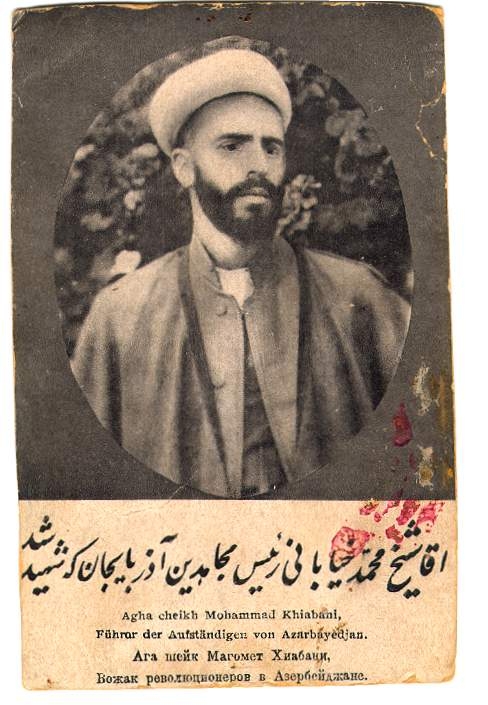
Elections were held in the besieged city and the anjuman resumed with a hundred members, launching the newspaper Nalah-yi Millat (The Appeal of the Nation) and budgeting for the fighters. Amirkhizi, Mirza Husain Va'iz, Khiabani and Muhammad Taqi Tabataba'i were among those elected. In the middle of a siege the resisters chose to rebuild democratic institutions rather than set up a military junta.
Tabriz
Shahrivar-Mehr 1287
A government campaign to retake the Caspian district from the local khans and peasant councils was defeated.
Tavalash · Gilan
Mehr-Aban 1287
'What we want is an end to this regime of oppression: laws, freedom, a constitution … I have four thousand men under arms, and I can have ten thousand if I want to, and I can hold out for ten years … They say we are rebels. No, we do not want any harm to come to the shah. But he should give us what we want! Or we will proclaim the republic!' The civil war had turned a constitutional restoration into something closer to a social revolution.
Tabriz
20 Mehr 1287· 16 Ramadan 1326 AH~
A week after the royalists pulled back from Amirkhiz and Khiaban, the royalist quarter surrendered. Mirza Hasan Mujtahid, the imam jum'ah and the commander Shuja' Nizam fled; their houses and the Islamiyah Anjuman were ransacked and set on fire. The Tabriz revolutionaries then issued a statement in French, Turkish and Persian: 'The people of Azerbaijan recognize no divine right in our King.'
Davachi · Tabriz
24 Mehr 1287· 20 Ramadan 1326 AH~
The Tabriz Social Democrats met to decide their course; some argued for declaring a republic.
Tabriz
6 Aban 1287· 3 Shawwal 1326 AH~
Haidar Khan 'Amu Ughlu, with a Georgian ammunition expert, sent a parcel bomb that killed the royalist governor and his son — a demonstration of Transcaucasian technical skill that frightened other anti-constitutionalists. Revolutionaries went on to take Khuy, Marand, Salmas and Maragheh; Haidar Khan governed Marand on the Social Democrats' orders.
Marand
Organization of Social Democrats (Firqah-yi Ijtima'iyun-i 'Amiyun)
8 Aban 1287· 5 Shawwal 1326 AH~
E. G. Browne, H. F. B. Lynch and allied MPs organised a British campaign against the Anglo-Russian Convention and for the constitutionalists.
London
28 Aban 1287· 25 Shawwal 1326 AH~
The Iranian Social Democrats and the Armenian Hnchaks formalised their cooperation.
Organization of Social Democrats (Firqah-yi Ijtima'iyun-i 'Amiyun) · Hnchak Party
1 Azar 1287· 28 Shawwal 1326 AH~
After months of Anglo-Russian pressure to convene a tame, modified assembly — without guild deputies, without anjumans, without a free press — the shah proclaimed that he had 'quite abandoned any idea of convoking a parliament, as the 'ulama had declared that such an institution is contrary to Islam'. The Najaf 'ulama rejected the statement and called for non-payment of taxes until the constitution was restored.
Tehran
1287-1288 AP
Sent from Baku at the head of a detachment of Transcaucasian Bolsheviks, Ordjonikidze stayed secretly at Karim Khan Rashti's house and opened a club that became the distribution centre for Marxist literature in Rasht. He translated parts of the Communist Manifesto into Persian and lectured on the 1905 Russian Revolution, on Iranian workers and peasants, and on peasant land seizures. Workers, artisans, peasants and young intellectuals attended; he debated the Dashnaks there. He kept Lenin informed and passed underground literature through Iran to Baku.
Rasht
1287-1288 AP
Letters in French between Taqizadah, Vram Pilusian and Tigran Ter Hacobian, published by Iraj Afshar, show that the idea of the party took shape in Tabriz before Taqizadah left for Tehran, and that Armenian social democrats shaped its organisation and doctrine. Pilusian — writing as Bahr ('Sea') or Dihati ('Peasant') — proposed forming a 'Democratic majority' in the Second Majlis, urged that the name avoid confusion with 'Social Democrat', wrote the party's internal regulations in French, and warned Taqizadah not to limit membership to Azerbaijanis lest the party take on a 'provincial character'. On hearing of 390 members in Tehran he called it a great thing 'to have in an Oriental country 390 people under the flag of a Democrat Party'. Ter Hacobian, who had written to Plekhanov in autumn 1908 arguing for a 'democratic' rather than 'social democratic' party, called for a nationality transcending ethnicity and creed: 'We shall recognize only one nation — the Iranian nation.'
Tabriz · Tehran
1287-1288 AP
The Mulla Nasr al-Din poet wrote a masnavi in the style of the Shahnamah praising the Tabriz commander, likening him to Rustam — the greatest hero of the Persian epic, and, in the Caspian myth, the one who overpowered the White Demon.
Tiflis
15 Dey 1287· 12 Dhu al-Hijjah 1326 AH~
Samsam al-Saltanah's Bakhtiari horsemen seized Isfahan and restored constitutional government there, opening the southern front against the shah.
Isfahan
15 Bahman 1287· 13 Muharram 1327 AH~
The blockade cut off food entirely; famine in the city became the argument for Russian intervention.
Tabriz
19 Bahman 1287· 17 Muharram 1327 AH~
The Sattar Committee and Caucasian volunteers under Yephrem Khan seized Rasht and killed the governor Sardar Afkham, creating the northern base for the march on Tehran.
Rasht · Gilan
Sattar Committee of Rasht · Caucasian Mujahidin · Armenian Revolutionary Federation (Dashnaktsutiun) · Barq Committee
30 Farvardin 1288· 28 Rabi‘ al-Awwal 1327 AH~
The young American teacher was shot leading a sortie against the besiegers, nine days before the siege was lifted; he became the revolution's most celebrated foreign martyr.
Tabriz
4 Ordibehesht 1288· 4 Rabi‘ al-Thani 1327 AH~
With Russian columns advancing, the anjuman surrendered at Taqizadah's suggestion, cabling the shah to ask 'the unkind father to rescue their common country from the danger of partition'. They protested the intervention: 'When Great Britain was fighting the Boers Persia stood aloof, nor did she interfere when Russia was involved with Japan in Manchuria. What right, therefore, had Great Britain and Russia to intervene in Persia when she was engaged in civil war?' The shah lifted the blockade and declared an amnesty on 25 April — too late to stop the Russians.
Tabriz
9 Ordibehesht 1288· 9 Rabi‘ al-Thani 1327 AH~
Russia intervened on the pretext of famine relief, lifted the royalist siege, disarmed the population and occupied the city — saving Tabriz from starvation while extinguishing its autonomy.
Tabriz
10 Tir 1288· 13 Jumada al-Thaniya 1327 AH~
The class-based curiae were abolished in favour of a broader male franchise, but Babis, Baha'is and women remained excluded.
Tehran
25 Tir 1288· 28 Jumada al-Thaniya 1327 AH~
The Gilan column under Sipahdar and Yephrem Khan and the Bakhtiari column under Sardar As'ad converged on the capital and took it, ending the Lesser Autocracy.
Tehran
Bakhtiari · Caucasian Mujahidin · Armenian Revolutionary Federation (Dashnaktsutiun) · Mujahidin
27 Tir 1288· 30 Jumada al-Thaniya 1327 AH~
An Extraordinary Grand Council deposed the shah, proclaimed his son Ahmad Shah, and appointed 'Azud al-Mulk regent.
Tehran
9 Mordad 1288· 13 Rajab 1327 AH✓
The leader of the mashru'ah movement was tried and publicly hanged in Artillery Square — an act that has divided Iranian opinion ever since.
Artillery Square · Tehran
22 Mordad 1288· 26 Rajab 1327 AH~
After Nuri's execution the paper printed an article calling the advent of Islam an unfortunate event that brought Arab culture to Iran, and urging constitutionalists to reject the 'ulama as Nadir Shah had and as Napoleon refused the pope. Judged 'derogatory toward Islam', it was closed and its editor Hasan Kashani sentenced to two years, though influential friends soon secured his release.
Tehran
26 Mordad 1288· 1 Sha‘ban 1327 AH~
A provisional executive of twenty took power pending elections to the Second Majlis.
Tehran
2 Shahrivar 1288· 8 Sha‘ban 1327 AH~
The social democratic daily edited by Muhammad Amin Rasulzadah appeared, soon becoming the organ of the Democrat Party and the largest paper in Iran.
Tehran
18 Shahrivar 1288· 24 Sha‘ban 1327 AH~
Muhammad 'Ali Mirza went into Russian exile on a pension guaranteed by the two powers.
Odessa
Aban-Azar 1288
Writing as 'Tayirah', 'Ismat Tihrani argued in the Democrat daily for women's education and legal equality.
Tehran
Aban-Azar 1288
Rahim Khan and his Shahsavan tribesmen occupied the city and slaughtered many of its residents, backed directly and indirectly by the Russian consulate. The disturbance then served Russia as a pretext for keeping its troops in the north.
Ardabil
24 Aban 1288· 2 Dhu al-Qa‘dah 1327 AH~
The new assembly convened and organised itself into parties for the first time: the Democrats of Taqizadah and Sulaiman Iskandari against the Moderates around Bihbahani.
Baharistan Square · Tehran
Second Majlis · Democrat Party · Moderate Party (I'tidaliyun)
1287-1288 AP
Because Tabriz had drawn off the bulk of the royalist army, the provinces gained room to move, and the Najaf call for non-payment of taxes gave them cover. Isfahan went first on 5 January; a week later general elections restored the Isfahan Anjuman with fifty-two members at the Chihil Sutun Palace. By late March Shiraz, Hamadan, Bushihr and Bandar 'Abbas had followed; at Bandar 'Abbas the revolutionaries deposed the governor and took the customs. North and south, the constitutionalists were taking control of foreign trade — which was what finally moved Britain and Russia.
Isfahan · Shiraz · Hamadan · Bushihr · Bandar 'Abbas · Mashhad
1288-1289 AP
The congress heard two reports on Iran — one from the Georgian Menshevik Tria, one from an Armenian Dashnak, each claiming the larger share of credit for Azerbaijan, Gilan and Tehran — and passed a resolution condemning Russia's armed intervention in Iran and Turkey, calling on European socialist parties to 'use every means in their power to put a stop to the reactionary proceedings of Czarism'.
1288-1289 AP
Published in Shafaq and denounced by the authorities. Daughters of the first generation of activists frequently became advocates in their own right: Afzal Vaziri was Bibi Vazirof's daughter.
Tehran
1288-1289 AP
Shukrullah Khan Mu'tamid Khaqan, a well-known constitutionalist who while in Europe had urged Sardar As'ad to join the march on Tehran, was killed in the wave of political murders. The Russian government was implicated.
Isfahan
12 Bahman 1288· 20 Muharram 1328 AH~
Distrusting its Iranian affiliates, the Baku centre dissolved them; the Democrat Party absorbed much of their membership.
Baku
12 Bahman 1288· 20 Muharram 1328 AH~
Iran-i Naw carried an open letter in which the Baku centre denounced 'party intrigues' and closed all its Iranian branches: 'now some people … have begun to play the game of forming parties! But, at this stage of the movement, formation of parties … is extremely detrimental.' It also disowned mujahidin who 'interfere with the peace of the populace'. The organisation had wanted a broad coalition of secular and moderate religious constitutionalists rather than European-style parties; in July 1909 it had sent word via Dawlatabadi telling Taqizadah to 'end the revolutionary turmoil' and Bihbahani to stay out of politics. By undercutting Taqizadah it inadvertently helped Sipahdar dilute the Directory and become premier.
Baku · Tehran
Organization of Social Democrats (Firqah-yi Ijtima'iyun-i 'Amiyun) · Democrat Party · Anjumans of the Mujahidin
Farvardin-Ordibehesht 1289
By April 1910 fifty girls' schools had opened in the capital and a women's congress on education met there. By 1913 the journal Shikufah listed sixty-three Tehran girls' schools with nearly 2,500 pupils — roughly one in seven of all school students in the city. British journalists reported the movement to London, noting it was backed by 'ardent young Persian visionaries who prattle about Socialism'.
Tehran
27 Farvardin 1289· 7 Rabi‘ al-Thani 1328 AH~
The two Tabriz commanders entered the capital to mass celebration — four months before being disarmed there by force.
Tehran
3 Khordad 1289· 15 Jumada al-Ula 1328 AH~
Iran-i Naw had called on readers not to celebrate Nowruz on 21 March 1910 in protest at the continued Russian occupation, and the call was heeded. On its closure it published 'The First Attack Is on the Press': Napoleon, Sultan 'Abd al-Hamid, the tsar against the Duma, and Muhammad 'Ali Shah against the First Majlis had all begun the same way. 'When they want to rob someone or kill him, the first act of the criminals is to gag the victim, so he cannot scream.' Public protest forced Sardar As'ad to lift the ban; Sipahdar resigned over it and was recalled on 9 June.
Tehran
11 Tir 1289· 25 Jumada al-Thaniya 1328 AH~
Under clerical pressure the Majlis asked the Democrat leader to absent himself for three months.
Tehran
23 Tir 1289· 7 Rajab 1328 AH~
The senior constitutionalist cleric was shot at home. Blame fell on Democrat sympathisers, and the killing split the constitutional camp irreparably.
Tehran
30 Tir 1289· 14 Rajab 1328 AH~
After the Najaf 'ulama denounced him as corrupt in belief, the Majlis voted Taqizadah out and he left for Europe.
Tehran
10 Mordad 1289· 25 Rajab 1328 AH~
Two Democrat Party activists were killed in reprisal for Bihbahani's assassination.
Tehran
15 Mordad 1289· 1 Sha‘ban 1328 AH~
Government forces under Yephrem Khan moved to disarm the mujahidin quartered at Atabak Park. In the fighting Sattar Khan was wounded in the leg — an injury from which he never recovered. The revolution's own government had broken its own fighters.
Atabak Park · Tehran
1288-1289 AP
Written in Iran-i Naw after the killings of Bihbahani, Tarbiyat and 'Abd al-Razzaq. Terrorism, he argued, mistakes government for a machine from which removing a few bolts brings collapse; but 'every dictator represents a certain class — Napoleon the French bourgeoisie, Pugachov the Russian peasantry, Nadir Shah the khans of Iran', and no government falls without its class foundations going first. Russia proved it: in 1909 alone 240,000 revolutionaries were imprisoned. 'History shows that the result of acts of terror is not revolution but an unleashing of counterrevolution.' Worse, terrorists and murderers merge in the public mind, costing revolutionaries the sympathy they depend on. He extended the argument to Bolshevik 'expropriations', which he said left radicals looking like thieves. 'The autocrats did not fear the hand grenades of a terrorist, but they trembled at the thought of an educated and orderly nation.'
Tehran
24 Shahrivar 1289· 11 Ramadan 1328 AH~
The first Iranian journal edited for and largely by women appeared in Tehran.
Tehran
23 Mehr 1289· 12 Shawwal 1328 AH~
Britain demanded that Iran secure the southern roads or accept a British-officered force to do it.
Tehran
30 Mehr 1289· 19 Shawwal 1328 AH~
An anti-imperialist congress of Muslim delegates met in the Ottoman capital in solidarity with Iran.
Istanbul
13 Aban 1289· 2 Dhu al-Qa‘dah 1328 AH~
Russia and Germany settled their differences over Iran and the Baghdad railway, removing Germany as a possible counterweight for Iranian nationalists.
Potsdam
1289-1290 AP
His first act, and a popular one: 'This trifling affair did much to strengthen the prestige of the Constitutional Government with the people in the provinces, who had really been suffering from a measure that had benefited no one but the tax-collectors who fattened on its proceeds.' Within weeks back taxes flowed into the capital, salaries abroad were paid, and full accounts were kept of every transaction. In five months of civil war his treasury collected more internal maliat than the government had in the whole preceding year.
Iran
1289-1290 AP
Published in spring 1911 on three principles — 'centralism, parliamentarianism, and democracy'. It sought to move Iran from an 'outmoded feudalist order' to a modern capitalist state with social reform for workers, artisans and peasants, and eventually socialism. It demanded a powerful central government to end the khans' regional control, industrialisation to withstand foreign penetration, a national military draft, and the separation of religion and state — a direct challenge to the two most formidable powers in the country, the 'ulama and the tribal khans. Afary notes the tension between its centralism and its democracy.
Tehran
10 Ordibehesht 1290· 2 Jumada al-Ula 1329 AH~
The American financial mission landed at Anzali, invited as a neutral third force to rebuild Iran's finances.
Anzali
8 Khordad 1290· 2 Jumada al-Thaniya 1329 AH~
The Majlis granted the American sweeping authority over revenue and expenditure — the reform that Russia would not tolerate.
Tehran
1289-1290 AP
Students of the Political School and the Dar al-Funun, associated with the Democrats, formed the National Legion and recruited over three thousand men in two days to fight the returning shah. By contrast only three hundred former mujahidin would enlist — and those mainly out of financial desperation — after the Atabak Park disarmament of the previous summer. Except for Yephrem Khan's Armenians, nearly every commander had to be heavily bribed before he would fight for the constitution.
Tehran
Mordad-Shahrivar 1290
Muhammad 'Ali Mirza landed on the Caspian coast with Russian connivance and raised Turkmen and tribal forces; his commander Arshad al-Dawlah was defeated and shot.
Astarabad · Gurgan
Turkmen · National Legion · Yamut Turkmen · Kalhur Kurds +1
Mordad-Shahrivar 1290
Shuster picked Stokes — four years in Iran, fluent in Persian and French, a correspondent of Browne who had criticised the 1907 Convention and fed Browne inside information against Grey's policy — to head the treasury gendarmerie. Greenway of the Anglo-Persian Oil Company warned that Stokes 'was entirely identified with the most extreme nationalists in Persia and attended the meetings of their anjumans'. Russia objected to a Briton supervising tax collection in the north; Grey, who had approved the appointment weeks earlier, reversed himself. Shuster refused to confine Stokes to the south, since that would amount to recognising the spheres of influence and would empty both the government he served and his own office of meaning.
Tehran · London
11 Mordad 1290· 8 Sha‘ban 1329 AH~
The Democrat deputy for Hamadan proposed votes for women during the debate on the third electoral law. The chamber refused even to record the proposal properly, and one cleric declared the subject unmentionable.
Tehran
5 Shahrivar 1290· 3 Ramadan 1329 AH~
'The reason for excluding women is that God has not given them the capacity needed for taking part in politics and electing the representatives of the nation. They are the weaker sex and have not the same power of judgment as men have. However, their rights must not be trampled upon, but must be safeguarded by men as ordained in the Koran by God Almighty.'
Tehran · London
10 Shahrivar 1290· 8 Ramadan 1329 AH~
Voted down twice, then carried by majority when the cabinet threatened to resign and Sipahdar's return loomed. Article 2 opened the constitution to revision — Barclay read it as reducing 'the complete supremacy of the Medjliss'; Article 3 let ministers punish 'irresponsible bodies' and those in 'secret meetings tending to mislead the public'; Article 4 attacked 'ill-advised decentralization'; the laws on provincial and municipal councils were to be revised and the cabinet empowered to dissolve the anjumans meanwhile; Article 5 condemned legal interpretations appealing to 'foreign laws'; Article 10 sought reconciliation with Russia and Britain. It passed only because Muhammad 'Ali Mirza was still on Iranian soil; once he was beaten, the Democrats recovered their majority.
Tehran
29 Mehr 1290· 29 Shawwal 1329 AH~
The new law widened the male franchise but explicitly barred women, and denied the vote to Babis and Baha'is.
Tehran
13 Aban 1290· 13 Dhu al-Qa‘dah 1329 AH~
Russia demanded an apology from Shuster's treasury over the seizure of Shu'a' al-Saltanah's property. Mass anti-imperialist demonstrations followed in Tehran.
Tehran
8 Azar 1290· 8 Dhu al-Hijjah 1329 AH~
The deputies voted unanimously to refuse the second Russian ultimatum demanding Shuster's dismissal — the assembly's last great act.
Baharistan Square · Tehran
Azar-Dey 1290
Russian forces executed revolutionaries across Azerbaijan — among them Siqat al-Islam, hanged on 'Ashura — shelled Gilan, and deported constitutionalists from the occupied zone.
Azerbaijan · Tabriz · Gilan
9 Azar 1290· 9 Dhu al-Hijjah 1329 AH~
Some three hundred women, several armed under their veils, went to the Majlis and told the deputies they would kill their own husbands and sons rather than see the ultimatum accepted — the most famous act of the Iranian women's movement of the period.
Baharistan Square · Tehran
Anjuman of Ladies of the Homeland · Second Majlis · Anjuman of Women's Efforts · Women's Union +1
13 Azar 1290· 13 Dhu al-Hijjah 1329 AH~
Iranian women appealed directly to the British women's suffrage movement against their government's complicity in the Russian ultimatum — an early act of transnational feminist solidarity.
Tehran · London
29 Azar 1290· 29 Dhu al-Hijjah 1329 AH~
A subcommittee headed by Sardar As'ad accepted the ultimatum; all the Democrats but one refused to vote for it.
Tehran
1 Dey 1290· 2 Muharram 1330 AH~
Russian artillery shelled the city that had saved the revolution, beginning weeks of hangings and reprisals.
Tabriz
2 Dey 1290· 3 Muharram 1330 AH~
The regent Nasir al-Mulk and the cabinet dissolved the assembly with the explicit backing of Britain and Russia, ending the Constitutional Revolution.
Tehran
25 Aban 1293· 28 Dhu al-Hijjah 1332 AH~
The Sardar-i Milli died in Tehran of the wound he had received at Atabak Park four years earlier.
Tehran
No events of that type.